QR Trust Authority Flow
Date: 2026-08-21
Purpose: - render the paper's Figure 2 as a diagram the docs site can display and zoom - separate governance (who may delegate to whom) from validation (what a verifier does at scan time)
Source figure:
- Figure 2 in the published QR trust paper
- published visual asset: QR_TRUST_AUTHORITY_FLOW.svg
- semantic reference: QR_TRUST_AUTHORITY_FLOW_ASCII.md
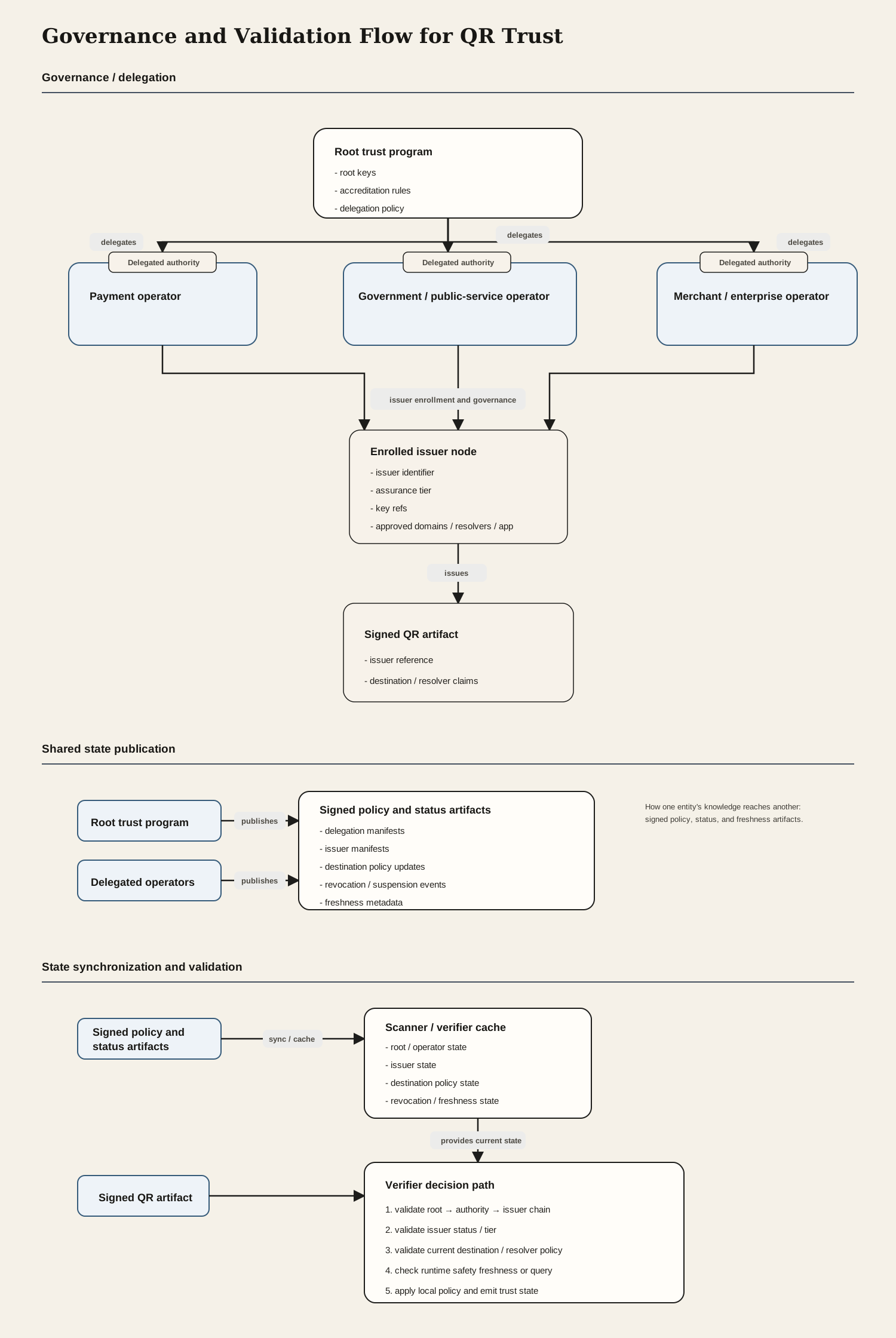
The SVG remains the authoritative published artwork. The diagrams below restate the same governance semantics in the docs' own diagram style; if the two ever diverge, the paper's figure governs.
Diagram color key
Color encodes function, not trustworthiness: blue marks the root of the trust program, amber marks delegated governance, violet marks issued and published artifacts, and green marks the verifier side that consumes them. Select any diagram to open the interactive zoom-and-pan view.
Governance and Delegation
root keys
accreditation rules
delegation policy
distribution endpoints"] ROOT -->|delegates| PAY["Payment operator
delegated tree"] ROOT -->|delegates| GOV["Government / public service
delegated tree"] ROOT -->|delegates| MER["Merchant / enterprise operator
delegated tree"] PAY -->|enroll / govern issuer| ISS GOV -->|enroll / govern issuer| ISS MER -->|enroll / govern issuer| ISS ISS["Enrolled issuer node
issuer identifier
assurance tier
key refs
approved domains / resolvers / app"] ISS -->|issues| ART["Signed QR artifact
issuer reference
destination / resolver claims"] classDef root fill:#eaf2ff,stroke:#1d4ed8,color:#172033,stroke-width:2px; classDef operator fill:#fff6db,stroke:#d97706,color:#4a2b05,stroke-width:1.5px; classDef issuer fill:#e8eefc,stroke:#334e9a,color:#172554,stroke-width:2px; classDef artifact fill:#f1edff,stroke:#7c3aed,color:#2e2153,stroke-width:1.5px; class ROOT root; class PAY,GOV,MER operator; class ISS issuer; class ART artifact;
Delegation is the only path to issuing authority: an issuer node exists because an operator enrolled it under rules the root program set, and the signed artifact carries a reference back up that chain rather than standing on its own.
Shared State Publication
delegation manifests
issuer manifests
destination policy updates
revocation / suspension events
freshness metadata"] OPS["Delegated operators"] -->|publishes| STATE classDef root fill:#eaf2ff,stroke:#1d4ed8,color:#172033,stroke-width:2px; classDef operator fill:#fff6db,stroke:#d97706,color:#4a2b05,stroke-width:1.5px; classDef artifact fill:#f1edff,stroke:#7c3aed,color:#2e2153,stroke-width:1.5px; class ROOT root; class OPS operator; class STATE artifact;
Both tiers publish into the same shared state. Revocation and freshness travel this path, which is what lets a verifier reach a different decision tomorrow about an artifact that has not changed.
State Synchronization and Validation
root / operator state
issuer state
destination policy state
revocation / freshness state"] CACHE -->|provides current state| DEC["Verifier decision path
1. validate root → authority → issuer chain
2. validate issuer status / tier
3. validate current destination / resolver policy
4. check runtime safety freshness or query
5. apply local policy and emit trust state"] ART["Signed QR artifact"] --> DEC classDef artifact fill:#f1edff,stroke:#7c3aed,color:#2e2153,stroke-width:1.5px; classDef verifier fill:#e8f8f5,stroke:#0f766e,color:#123c38,stroke-width:1.5px; classDef decision fill:#e8eefc,stroke:#334e9a,color:#172554,stroke-width:2px; class STATE,ART artifact; class CACHE verifier; class DEC decision;
The decision path takes two inputs, not one: the scanned artifact and the cached current state. That second input is the whole point of the figure — a verifier that only reads the artifact can validate a signature but cannot answer whether the destination is still approved or whether the issuer is still in good standing.